
Lung cancer

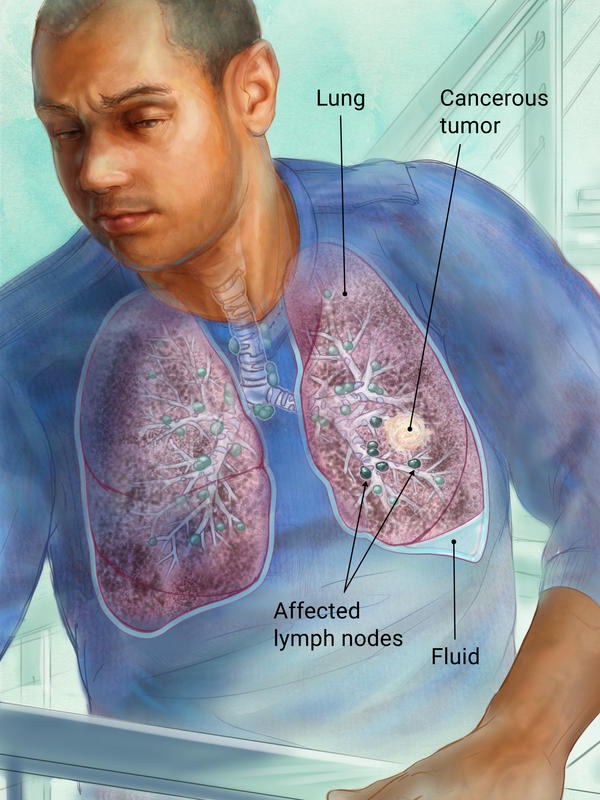
A cancer that begins in the lungs and most often occurs in people who smoke.
Common
200,000 to 3 million US cases per year
Two major types of lung cancer are non-small cell lung cancer and small cell lung cancer. Causes of lung cancer include smoking, secondhand smoke, exposure to certain toxins, and family history.
Symptoms include cough (often with blood), chest pain, wheezing, and weight loss. These symptoms often don't appear until the cancer is advanced.
Treatments may include surgery alone, but also might include chemotherapy, radiation, or a combination of these.
Ages affected
| 0-2 |
|
| 3-5 |
|
| 6-13 |
|
| 14-18 |
|
| 19-40 |
|
| 41-60 |
|
| 60+ |
|
Requires a medical diagnosis
Symptoms include cough (often with blood), chest pain, wheezing, and weight loss. These symptoms often don't appear until the cancer is advanced.
People may experience:
Pain: can be dull, sharp, can occur while breathing, in the chest, or rib
Cough: can be severe, with blood, chronic, dry, or with phlegm
Respiratory: frequent respiratory infections, shortness of breath, or wheezing
Whole body: fatigue, loss of appetite, or weakness
Also common: chest discomfort, hoarseness, swollen lymph nodes, or weight loss
Treatable by a medical professional
Treatments may include surgery alone, but also might include chemotherapy, radiation, or a combination of these.
Prescription
Chemotherapy regimen by injection: Carboplatin, Gemcitabine (Gemzar), Topotecan, Etoposide (Toposar), Pemetrexed, Irinotecan, Ifosfamide (Ifex), Docetaxel (Docefrez), Cisplatin (Platinol-AQ), Vinblastine, Doxorubicin (Adriamycin), Paclitaxel (Taxol)
Other treatments: Crizotinib, Erlotinib (Tarceva), Cyclophosphamide, Gefitinib (Iressa), Bevacizumab by injection, Methotrexate
Also common
Lifestyle: Smoking cessation
Chemotherapy regimen: Docetaxel-Gemcitabine regimen
Procedures: Radiation therapy, Video-Assisted thoracoscopic surgery, Radiosurgery, Thoracotomy, Wedge resection, Lobectomy
Specialists
Oncologist: Specializes in cancer.
Palliative medicine: Focuses on improving quality of life for terminally ill patients.
Primary care provider (PCP): Prevents, diagnoses, and treats diseases.
Radiologist: Uses images to diagnose and treat disease within the body.
Pulmonologist: Treats respiratory tract diseases.
Cardiothoracic surgeon: Surgically treats diseases affecting organs inside the chest.